

Knowing how to hire coaches for your sports training business is what separates a one-person hustle from a real company.
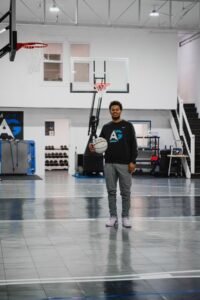
Austin Carroll, known as Coach Ace, owns Ace Grind Sports Performance in Bridgeport, Pennsylvania. He manages two training locations, runs an AAU program, and has coached college basketball at Eastern University for 8 years. If you know anything about college coaching, that’s basically a second full-time job.
None of that is possible without a coaching staff. Here’s exactly how he built his.
Who is Coach Ace?
Austin Carroll started Ace Grind Sports Performance as a side hustle right after graduating from Eastern University in 2017. He spent years working chain gym jobs and growing Ace Grind on the side. After COVID, the business took off, and he went full-time in 2021.
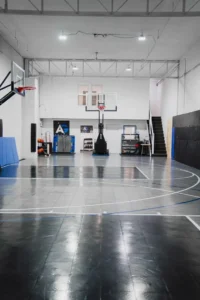
Today he runs Ace Grind HQ, a 2,700-square-foot facility in Bridgeport with two overlapping half courts, plus a partnership location called The Hoop House near Villanova University. His programming covers youth athletes through professional players, with a core focus on basketball skill development, group training, and strength and conditioning.
Your training business is a single point of failure
Most coaches build around themselves. Every session goes through them. Every parent relationship is with them. If they step away, even for a week, the business stalls.
Coach Ace had no choice but to solve this early. His college coaching calendar pulls him away from Ace Grind for months at a time. The business had to run without him, or it wasn’t going to survive.
“You have to delegate, you have to multiply yourself. You have to be willing to create a system that can be replicated by your team so that the product is still consistent.”
That forced decision is what most coaches avoid until they’re already overwhelmed. Figuring out how to hire coaches for your sports training business before the pressure hits is what turns a fragile solo operation into something that can actually grow.
How do you find quality coaches for your sports training business?
Ace built his entire staff pipeline through college internship programs.
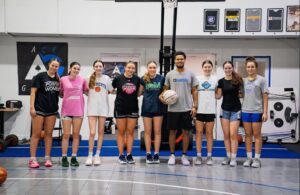
He partners with local universities, including his alma mater Eastern University, to recruit seniors in exercise science who need internship hours to graduate. Students get class credit. Ace gets trainers who are hungry, coachable, and showing up with no bad habits from other programs.
He doesn’t wait for applications. Every year he goes directly to the rising senior class at Eastern, speaks to them in person, and lets them see who he is and what Ace Grind is about. For other local schools, he contacts the internship coordinator or department chair, describes his business, and asks to be included in their placement list.
“These universities are looking for us. They don’t know what’s out there. And they want their students to see that there’s more to do with a sports science degree than go to PT school.”
Most coaches assume this is complicated. It’s usually just an email.
How to onboard new coaches for your sports training business
Before any coach leads a session at Ace Grind, they shadow for at least a month.
They help with camps, assist during group sessions, and see Ace on good days and rough days both. The point isn’t just to observe. It’s to absorb the values, the energy, and the standard before he hands them any real responsibility.
“The only way to thoroughly get a trainer to understand your commitment and your pride in the work that you do is for them to be around you.”
Skipping this step, Ace says, costs you the only real opportunity to put your culture into someone before differing habits take hold. Four of his first five coaches came through this process. He’s since shortened the timeline for more polished candidates, but the shadowing phase is non-negotiable.
He also built a formal onboarding checklist with a former intern who now handles admin work remotely. It covers CPR and first aid certification, sports instructor insurance options, business banking recommendations, and a full walkthrough of what being a 1099 contractor actually means, including which expenses to write off and how to track income weekly. He hands them the Excel sheets he built when he was starting out.
“The better they manage their business, the better they’re managing my business.”
How to pay coaches in your sports training business
All of Ace’s coaches are 1099 independent contractors. Every coach knows their split per private session and their percentage per athlete in group training before they step on the court for the first time. For clinics or team practices with variable attendance, they get a flat rate.
No surprises. He’s been on the wrong end of this.
“I worked as a personal trainer at a chain gym and they were selling sessions at $125 an hour and I was getting $40. They at least told us.”
The lesson he took: be fully transparent about the numbers from day one. That transparency is also a retention tool. Coaches who understand what they’re earning and trust how the business is run don’t leave when a bigger facility opens down the street.
He asks every coach one question during onboarding: do you want to eventually run your own business, or are you looking for a long-term home? The answer changes how he develops them. Two of his coaches have since launched their own programs in the area. He still sends athletes their way when he can’t take them. It works because he expected it, not despite it.
Managing a multi-coach operation means athletes can’t fall through the cracks when someone else covers a session. CoachIQ’s client management system keeps every athlete’s history, bookings, and notes in one place, so any coach can step in without missing anything.
Build the systems before you need the help
The mistake most coaches make when figuring out how to hire coaches for their sports training business is waiting until they’re swamped. By then, you’re moving fast, onboarding poorly, and hoping someone figures it out. Ace built the opposite: a pipeline that produces coaches who know exactly what an Ace Grind session looks like before they take their first athlete.
Read how Coleman Ayers grew his sports training business to 7 locations for another look at what building a staff-supported operation actually requires.
Part of what makes it possible is having the back-end infrastructure dialed in. When athletes book their own sessions through CoachIQ’s automated scheduling system, coaches stop managing calendars through group chats and can focus on actually developing other coaches. Read how Mike Shaughnessy automated his coaching operations to see what that looks like in practice.
The bottom line
Hiring coaches for your sports training business isn’t just about getting help on the court. It’s about building something that doesn’t stop when you step away.
Coach Ace built his staff through a college internship pipeline, a structured shadow-first onboarding process, and an open-book pay model that keeps coaches around long enough to actually get good. His business now runs whether he’s at Ace Grind HQ or on the road for a college basketball road trip.
If you’re ready to build the systems that support a real coaching team, book a free CoachIQ demo and see how coaches are managing athletes, scheduling, and staff all in one place.
Follow Coach Ace’s work at @acegrind_hq on Instagram.
